

Why This Project Matters
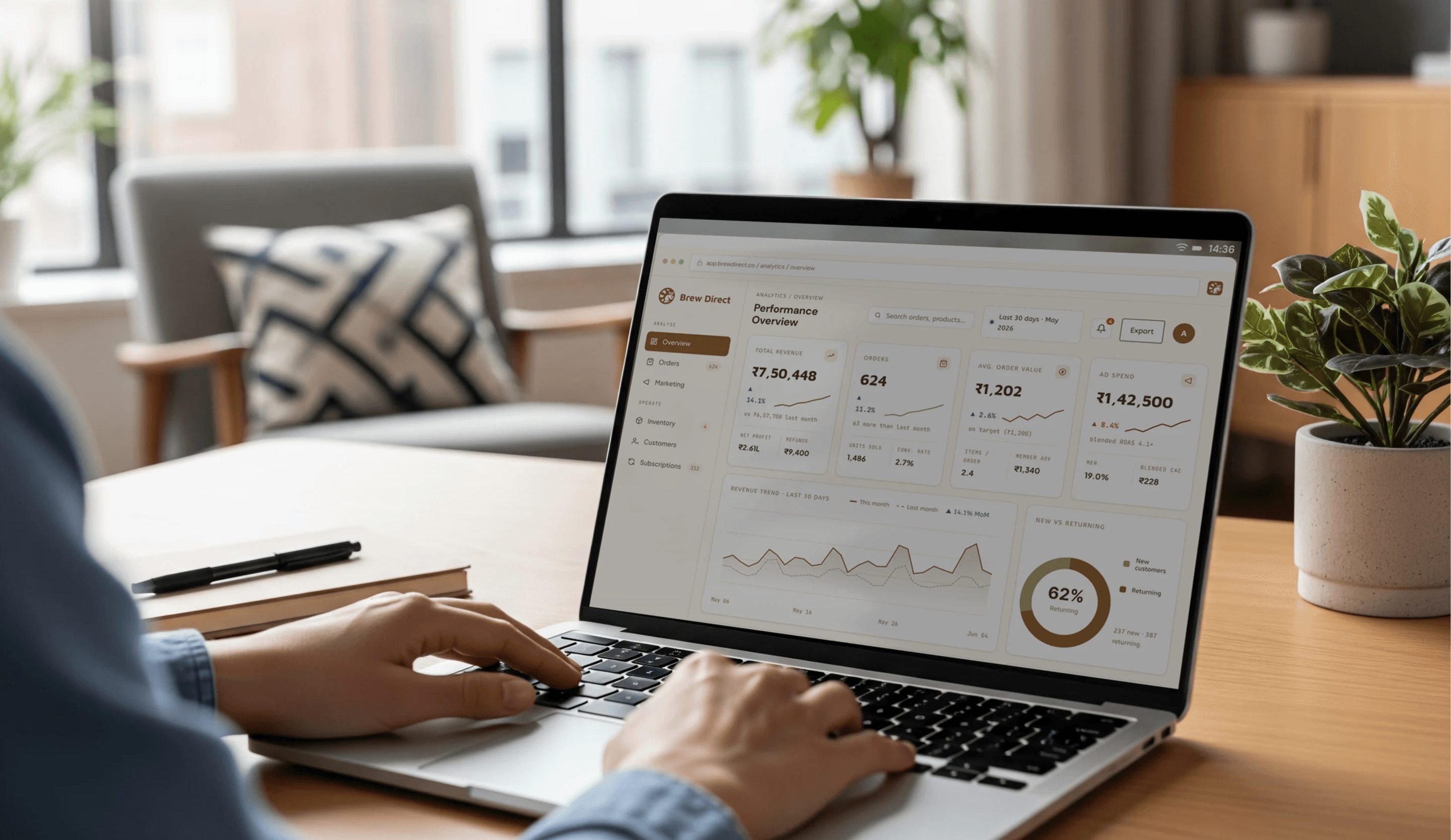
Imagine running a premium D2C coffee brand, shipping 500 to 800 orders a month. Before this dashboard, the owner had to log into Shopify for sales, Meta for Instagram ads, and Google for search campaigns, pulling data messily into spreadsheets just to figure out if they were profitable that day.
This project matters because small business owners do not have time to be data analysts. They need a single, reliable screen that tells them the exact health of their business in five seconds.
DISCIPLINE
Information Architecture
Prototyping
UI/ UX
Data Visualisation
UI UX DESIGN
Brew Direct
Analytics:
Turning Data into
Decisions
The Problem
The founder was flying blind. Crucial data was scattered across
platforms. It was too easy to miss a sudden spike in ad costs
or fail to realize a top-selling coffee roast was out of stock until
a customer complained.
Shopify sales
Meta ads
Spreadsheets manual
Google search

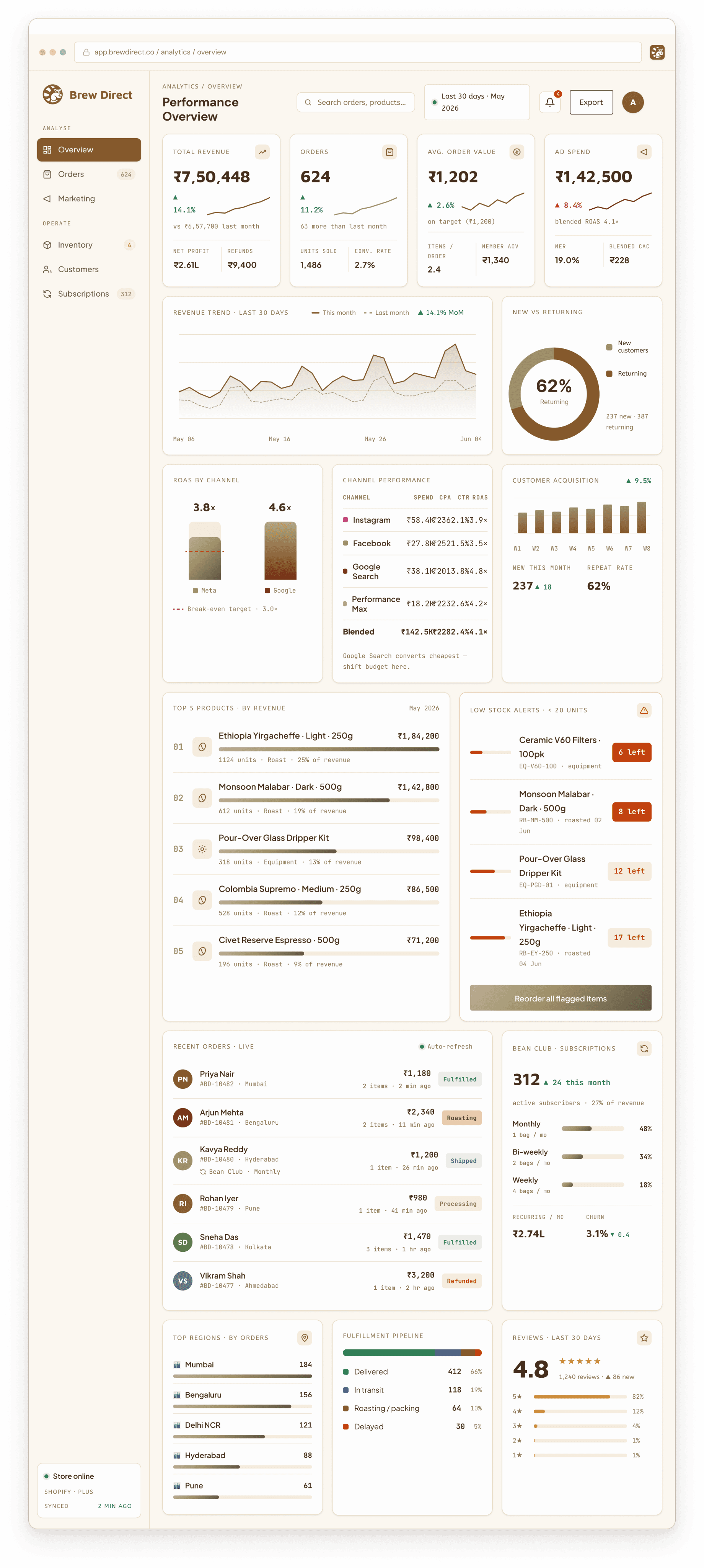
Small business owners often suffer from cognitive overload when navigating fragmented data across multiple platforms like Shopify, Facebook Ads Manager, and Google Analytics. The primary challenge was to design a single-screen snapshot that eliminates this friction. The interface needed to instantly answer critical business questions such as current cash flow, marketing efficiency (ROAS/CPA), and urgent operational bottlenecks without overwhelming the user. A specific constraint was ensuring that urgent alerts, like low stock warnings (under 20 units), were immediately visible without cluttering the daily performance metrics.
Challenge
The Solution
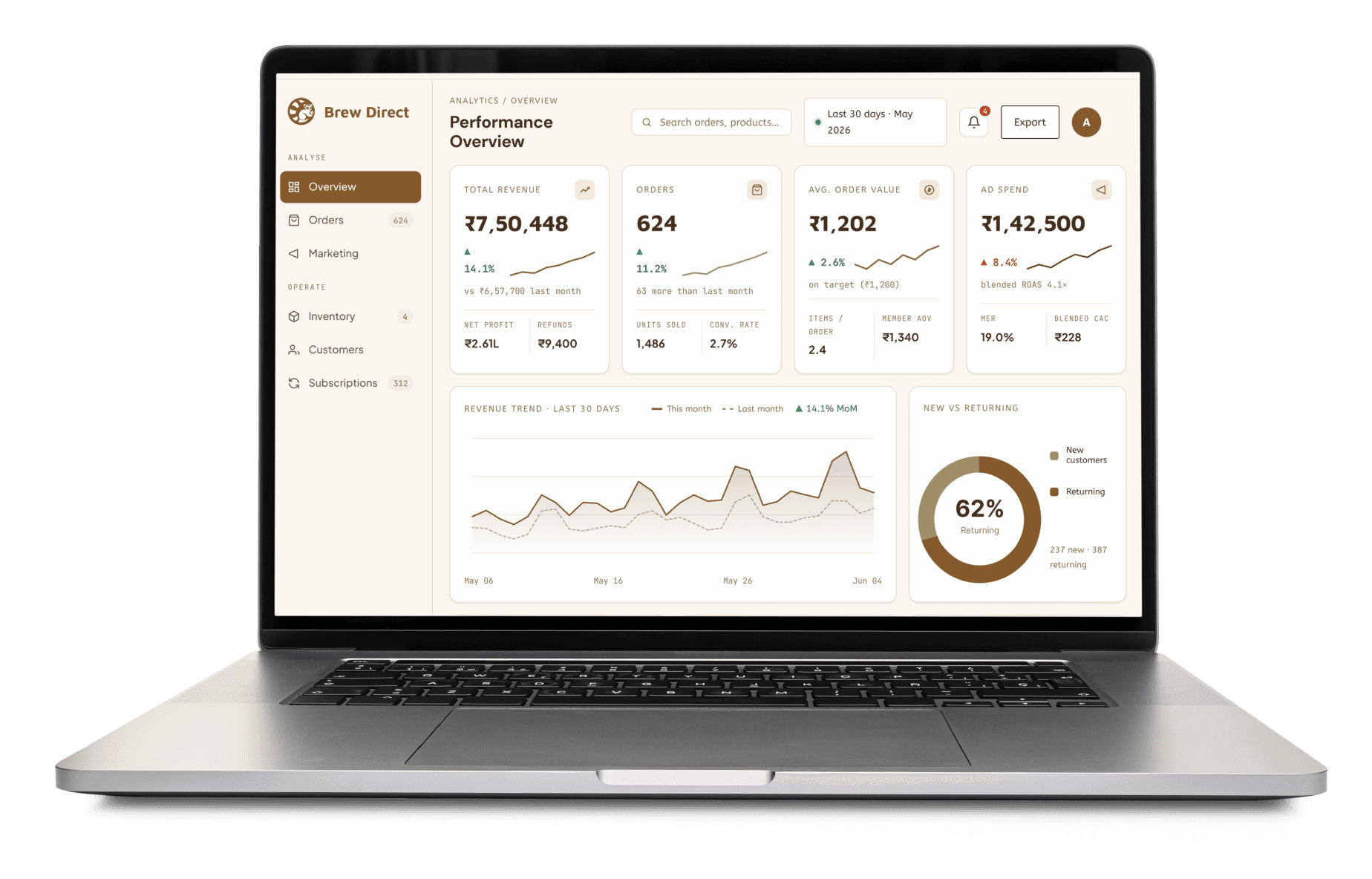
A highly structured, result-driven analytics dashboard built on a robust grid system. By establishing a clear information architecture, the design categorizes data into logical zones: start with revenue KPIs at the top, a central area for comparative marketing trends, and operational details at the bottom. This humanized approach ensures the brand owner can process complex data, like Meta versus Google ad performance, in under five seconds to make informed strategic decisions.
One screen
Eye-level KPIs
Five-second read
Saves Time
Replaces hours of manual data gathering with an instant, unified daily snapshot.
Optimizes Ad Spend
By placing Meta and Google return-on-ad-spend side by side, the owner can instantly shift budget to the platform that is actually performing.
Prevents Lost Sales
A dedicated, highly visible “Low Stock” alert ensures top-selling products (under 20 units) are reordered before they sell
out and halt revenue.
Impact in Business
Key Insights
Context over raw numbers
Knowing the total revenue is not helpful without knowing the momentum. I paired every major metric with a percentage trend indicator to show immediate growth or decline.
Soft minimalism as a tool
To reduce visual fatigue, I used a clean, white-mode interface.
Colour was used very strategically, reserving bright warning colours strictly for urgent
inventory alerts so they immediately grab attention.
Grouping for action
I grouped marketing spend next to new-customer acquisition trends. When a founder sees these together, they instantly understand the direct result of
their advertising.
The single screen that runs
the business
Outcomes
A high-fidelity, result-driven UI
screen that merges complex
e-commerce, marketing and
inventory data into a calm distraction-free environment.
It proves that business intelligence does not need to be
intimidating , it just needs to be organized logically to
empower the team.
1
Screen replaces 3 logins +
spreadsheets
5s
To read full business health
<20
Unit threshold flags reorders early
2
Ad channels compared side by
side
This project reinforced my belief in humanized design. A successful interface does not just display numbers. It respects the user's time and provides a clear, ego-free tool that actively supports their business strategy.
Reflection